
Student Investing
Investing is often made to feel complicated or intimidating, especially when you’re a student. Between tuition, rent, and day-to-day expenses, it can seem like investing is something you’re only supposed to worry about much later in life.
In reality, investing is less about how much money you have and more about understanding how your money can grow over time. Learning the basics while you’re young can help you make better decisions later, even if you don’t start investing right away!
This article breaks down what investing actually is, why it can matter as a student, and when it might make sense to wait. Let’s get straight into it!
What is Investing?
At its core, investing means buying things (assets) that have the potential to grow in value over time, increasing your overall wealth. Common examples include stocks, exchange-traded funds (ETFs), and real estate. Unlike savings, which is meant to keep money safe and accessible, investing involves some degree of risk in exchange for the chance of higher long-term growth.
This is why investing is typically recommended for long-term goals, such as retirement, rather than short-term goals, like saving for a car. Most forms of long-term investing are not about quick profits or timing the market. It’s about staying invested for as long as you can and letting the growth compound.
Why Time Matters More Than Money
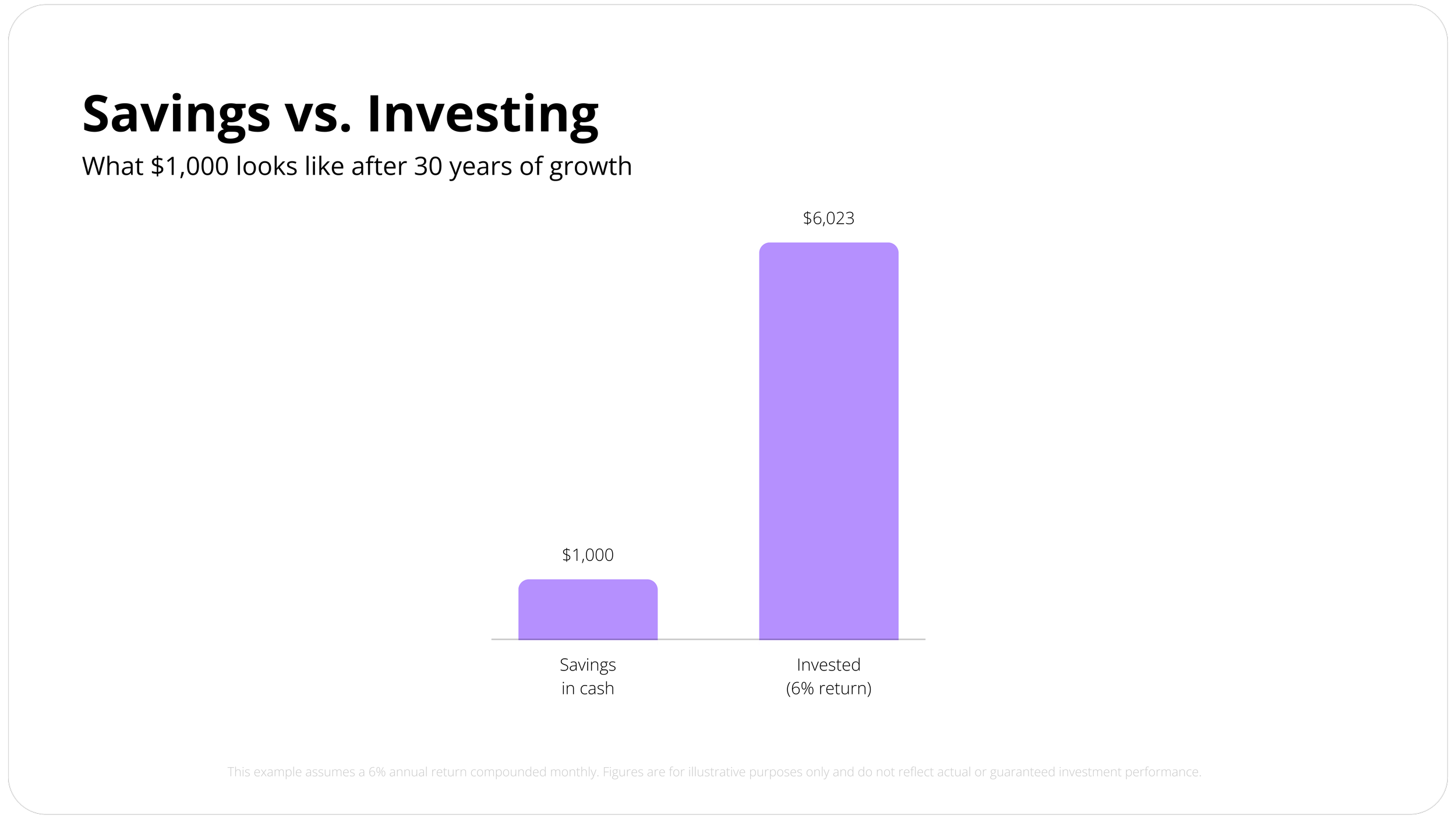
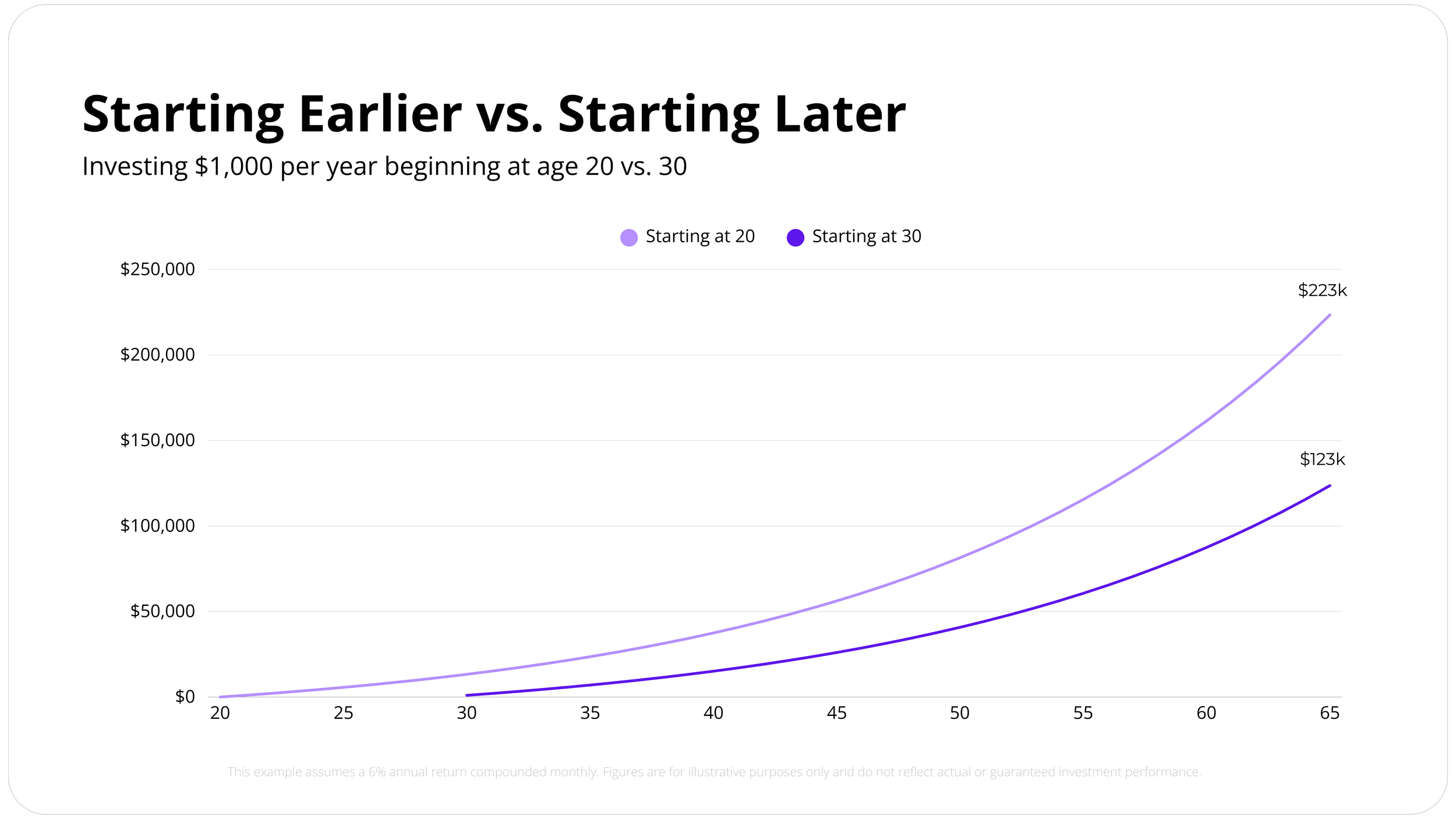
One of the biggest advantages that students have is time. When you invest earlier, your money has more years to grow, and even small amounts can add up over a long time. This is because investment returns can compound and grow exponentially, meaning your money can generate its own earnings over time.
This doesn’t mean that students need to invest large amounts or feel pressure to start immediately. The real value of learning about investing as a student is understanding how it works BEFORE you start earning more money post-graduation. If you were making a six-figure salary and decided to invest it with no prior knowledge, that’s a disaster waiting to happen. It’s better to learn it now while the stakes are low!
Knowing the basics early gives you flexibility and confidence when you ARE ready to start investing larger amounts.
The Ups and the Downs
Investing is not always straight line upward. As we mentioned earlier, when you invest, you are taking on some degree of risk, depending on the investment you make. Investments can fluctuate, sometimes sharply, and this volatility is a normal part of the investment process. In the short term, investments can lose value, which is why investing money that you may need soon can be quite risky.
For long-term goals, these ups and downs matter much less. Historically, markets have trended upward over long periods, but this isn’t a guarantee that they will continue to do so. Understanding this helps set realistic expectations and prevents panic during market downturns.
But… Investing Isn’t Always the Right Move
This is where student investment advice often misses the mark.
Investing isn’t always the best move if you’re struggling to cover basic expenses, relying on high-interest credit cards, or don’t have any emergency savings. In these situations, focusing on budgeting, saving, and stabilizing your finances can be far more impactful than investing. Here are some prerequisites we recommend you have before you start actually investing:
A basic understanding of where your money comes from and where it goes
Some emergency savings so unexpected expenses don’t derail you
Having high-interest debt, like credit cards, under control
Money you won’t need in the short term
Comfort with short-term ups and downs
If you don’t have all of these yet, that’s okay. Learning comes first, and investing can come later. There’s nothing wrong with waiting until your financial situation feels more stable!
The Takeaway
Investing, at least the way that we recommend, is a long-term tool for building wealth. As a student, the most important step is understanding how investing works and how it fits into your overall financial picture.
You don’t need to have everything figured out to start learning, and you don’t need to start investing until it makes sense for your situation. Time is an advantage, but stability should always come first!
